
Salesforce Data 360 is the new name for Data Cloud, Salesforce’s customer data platform. It pulls data from your CRM and other systems, matches records that belong to the same customer into one profile, and makes that profile available for segments, analytics and AI agents. Same product, same capabilities, new name since October 2025.
Key takeaways
We first wrote about Data Cloud in early 2025. Since then the product has a new name, Salesforce’s AI story has moved on, and we get asked about it far more often. So we’ve rewritten this guide from scratch.
Yes. Salesforce renamed Data Cloud to Data 360 at Dreamforce 2025, as part of its Agentforce 360 launch (Salesforce Ben). Salesforce describes it as the same product with the same capabilities, and says existing contracts are honoured through the current term (Salesforce).
If you’re keeping score, that’s its sixth name. It started life as Customer 360 Audiences, then became Salesforce CDP, Marketing Cloud Customer Data Platform, Salesforce Genie and Data Cloud. You’ll still see ‘Data Cloud’ in Setup screens, older docs and plenty of job adverts for a while yet.
Strip away the marketing and it does four things.
It ingests data from Salesforce clouds, websites, apps and files. With Zero Copy it can also read data held in Snowflake, Databricks or Google BigQuery without moving it (Salesforce). That matters if your finance or product data already lives in a warehouse and you don’t want yet another copy.
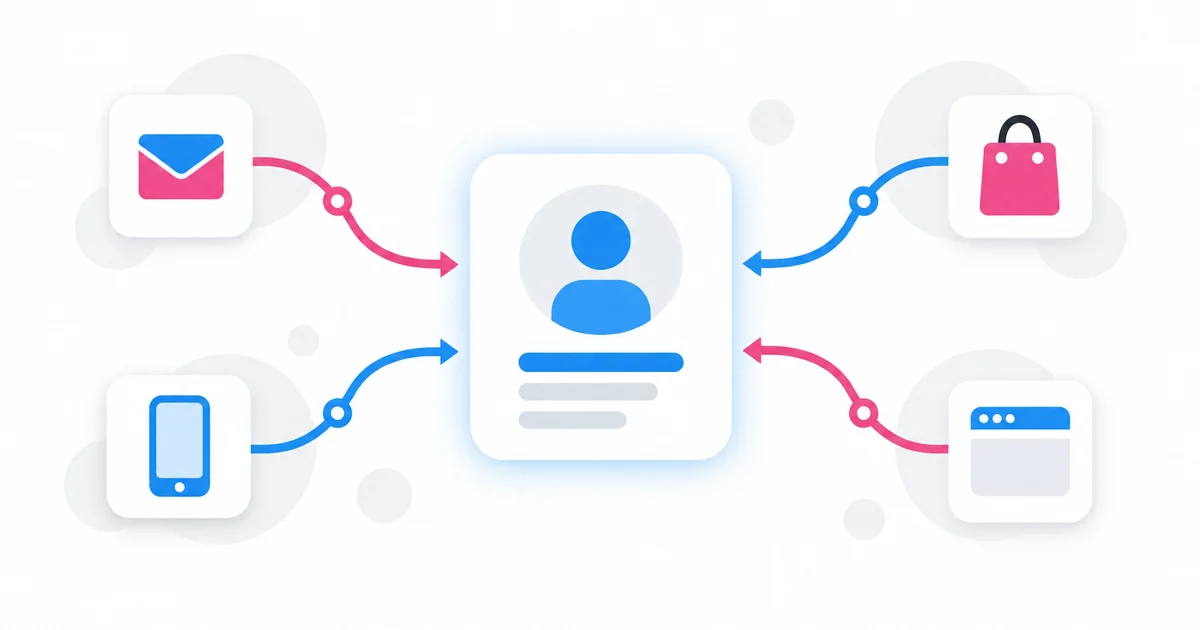
Identity resolution matches ‘J. Smith’ in your billing system, ‘john.smith@’ in your email platform and the John Smith in Sales Cloud into one unified profile, using rules you control. Get this right and everything downstream improves.
You can calculate metrics such as lifetime value or engagement scores, then build segments like ‘customers who bought twice but haven’t opened an email in 90 days’.
Segments can be published to Marketing Cloud Engagement, file storage or ad platforms including Google, Meta, LinkedIn and Amazon Ads (Salesforce Help). Unified profiles can also appear on the contact record, so your service team sees the full picture.
Your CRM holds operational records: accounts, contacts, cases, opportunities. People type into it and work from it every day. Data 360 sits alongside it and handles the high-volume stuff a CRM was never built for, such as web clicks, app events, purchase history from another system and unstructured content like PDFs. It then joins all of that back to the customer.
A simple test: if the data is created by your team, it probably belongs in the CRM. If it’s created by your customers’ behaviour, in large volumes, it probably belongs in Data 360.
Yes, it’s Salesforce’s customer data platform. Salesforce puts it neatly: Marketing Cloud is the marketing execution layer, Data 360 is the CDP underneath it (Salesforce). If you already run Salesforce Marketing Cloud, Data 360 is what lets you segment on data from outside it. Our Marketing Cloud consultants can talk you through how the two connect.
AI agents are only as useful as the context they’re given. Salesforce now positions Data 360 as the data layer that gives every agent that context, with features like Intelligent Context for unstructured content (Salesforce). It’s also a hard requirement: Data 360 must be provisioned before you can set up the Einstein Trust Layer and Agentforce (Salesforce Developers). Our guide to planning an Agentforce implementation covers what else you need.
There’s a free starting point. Since September 2023, Enterprise Edition and above customers can provision Data 360 at no cost, which includes 250,000 Data Services credits a year and 1 TB of storage (Salesforce Help). Beyond that, Salesforce offers usage-based Flex Credits or per-profile pricing, and data ingestion itself is listed as free (Salesforce Data 360 pricing).
Usage-based pricing is flexible but easy to underestimate. Model your data volumes, refresh frequency and segment activity before you commit.
If your customer data already lives almost entirely in Sales or Service Cloud, you don’t run high-volume digital channels and you aren’t planning AI agents, Data 360 may be more platform than you need. Fixing duplicates and reporting in the CRM itself often gets you most of the benefit for far less effort.
And if your data is a mess, sort that first. Data 360 will happily unify bad data into one very confident, very wrong profile. Our posts on when data migration is required and the Salesforce health check are good places to start, and our integration specialists can help connect the systems that matter. Talk to us if you’d like a straight answer on whether Data 360 is worth it for you.
Salesforce Data Cloud, now called Data 360, is Salesforce’s customer data platform. It connects data from Salesforce and other systems, resolves records into one profile per customer, and makes those profiles available for segmentation, analytics, marketing activation and AI agents such as Agentforce.
Salesforce renamed Data Cloud to Data 360 at Dreamforce in October 2025, as part of the Agentforce 360 launch. Salesforce says the product and its capabilities are unchanged, and existing contracts are honoured through their current term.
Enterprise Edition and above customers can provision Data 360 at no cost, with 250,000 Data Services credits a year and 1 TB of storage. Heavier use is paid for through Flex Credits or per-profile pricing.
Yes. Salesforce requires Data 360 to be provisioned before you can set up the Einstein Trust Layer and turn on Agentforce agents.
No. Marketing Cloud runs campaigns and journeys. Data 360 is the customer data platform underneath, unifying profiles and building segments that Marketing Cloud and other channels can use.